
Rosie’s Prints
Putting marketing into practice.
How running my own small business sharpened my approach to branding, content and the customer journey.
The starting point
A practical testing ground.
Rosie’s Prints began as a hobby and grew into my own small Etsy and events business. A varied range of 3D-printed fidgets and gifts needed a recognisable brand and a clear way for customers to explore their choices.
A very limited budget meant making careful choices about where to invest time and effort. Managing the marketing alongside production and customer orders brought those choices into the day-to-day running of the business.
Brand & packaging
Taking a brand beyond the logo.
The brand needed to feel recognisable wherever someone encountered it, from an Etsy listing to a stall banner or the packaging that arrived with an order.
The colour palette and graphic style create that connection across business cards, printed information and personalised tags. Each format has a different job, so the layout and level of detail change while the identity stays recognisable.
It’s the same consideration that guides client work, where an identity has to hold together across the materials a business uses every day.
Making products easier to choose.
Once a product catches someone’s eye, the listing has to turn interest into understanding. Customers need to see what they are choosing, how it moves and which options are available.
On Etsy, photography, copy and visual merchandising work together to make those choices clear. Listings pair product images with details about size, movement and colour.
Party-favour orders add another layer of choice, with packs of 10, 20 or 30 and optional colour and gift-wrapping upgrades. Branded graphics bring the quantities, prices and savings together, while the ordering steps guide the choice of designs, colours and personalised tags.
A made-to-order offer also needs a usable customer brief. Explaining the choices and gathering the order details are part of the same experience, so the marketing and fulfilment need to work together.
Giving each post a clear job.
Social content carries that product story into a different setting. Each post needs a clear reason to appear in someone’s feed and a useful next step.
The Medstead Fair post combines product imagery with practical event details and an invitation to the play zone, giving visitors a picture of what to expect. View the event post →
For the party-bag offer, a completed order provides a concrete example of the branded packaging and personalised tags. The personalisation becomes something a potential customer can picture. View the party-bag post →
The purpose shapes the choice of imagery and words, keeping the creative treatment connected to what the reader needs.
Product photography & content
Pictures say a thousand words
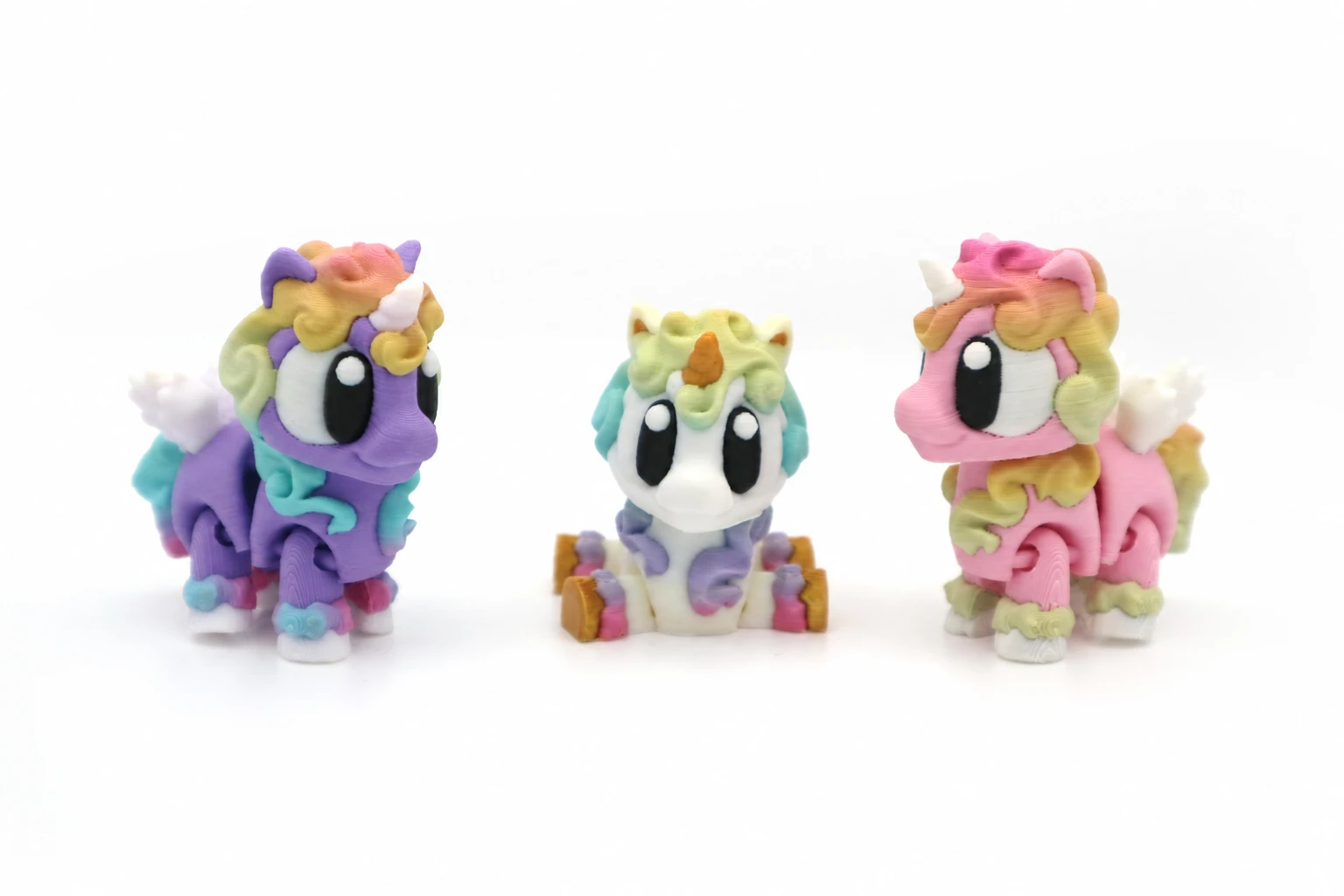
The colour and character of the range are visible at a glance, while close-ups explain the details. Group shots show how products fit together, and in-hand videos reveal how the pieces move. The format follows what a customer needs to understand.
Events & point of sale
Designing an invitation to try.
At events, the product story becomes something visitors can explore for themselves. The presentation for four events combined branded displays and clear product information with an interactive “Please Touch” play zone.
Tiered shelves and visible pricing support browsing, while the play zone invites people to pick up the products and experience their movement. The brand and signage hold the presentation together across the stall.
Bringing these elements together developed my understanding of point-of-sale design as part of the wider customer experience. Layout, information and interaction all have a role in how a range is presented.
What I bring to client work.
This experience strengthened my judgement about how a brand, its content and its customer experience work together, and where to put limited time and resources.
The same thinking guides client work: understanding the offer and the customer’s questions, then shaping the content and materials around them. It connects creative work with the practical detail needed to carry an idea through to delivery.
It starts with a conversation
Tell me what you’re working on.
You don’t need a finished brief. Share what you have in mind and we can work through the next steps together.